
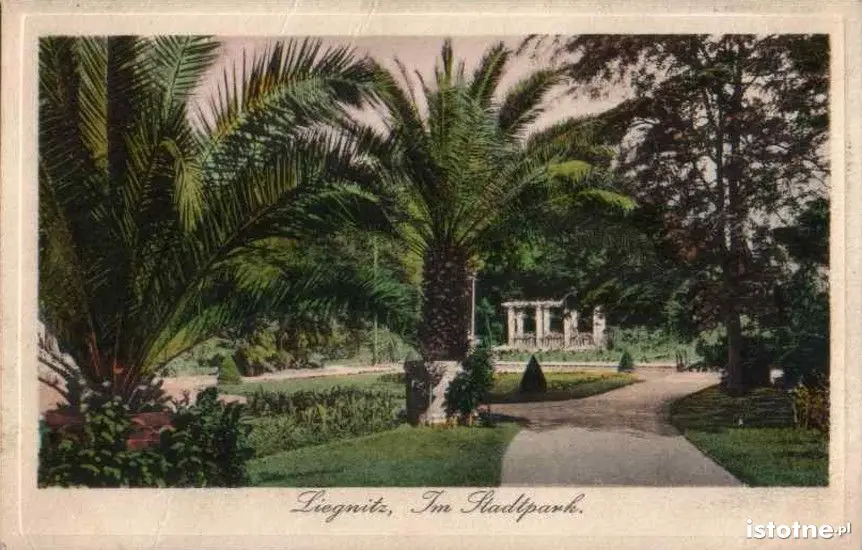
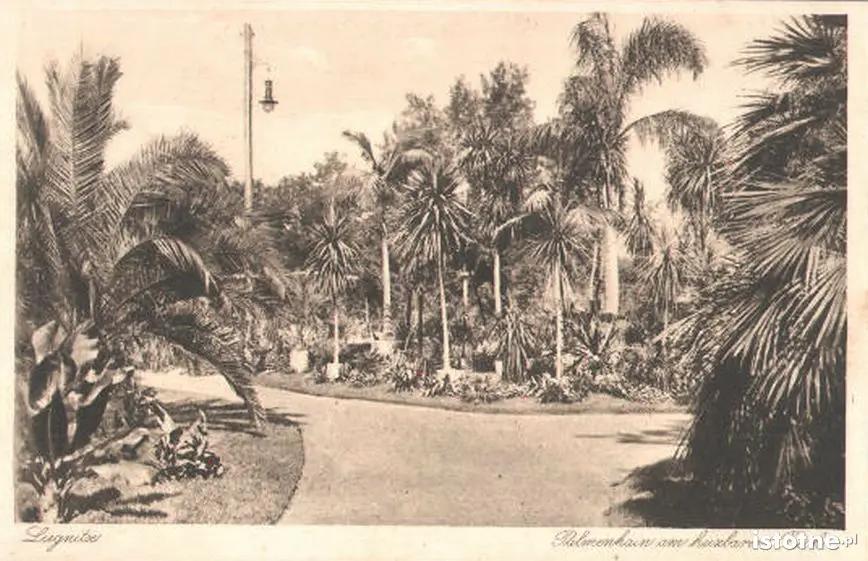
Gaj Muz, also known as Palm Grove, existed from 1887 to 1945. Before World War II, it operated under the German name Musenhain. It was located in the City Park and formed an extension of the palm house built in 1885.
It was created thanks to the efforts of the municipal director of horticulture, while the construction of the facility was financed with money raised from horticultural exhibitions. The idea behind the plant displays was similar to the concept of botanical gardens. In summer, the most impressive palms were brought out of the palm house and displayed there, with sculptures placed among them.
Today, we can admire the beauty of the no-longer-existing Gaj Muz in old postcards that survived the upheavals of history.




Sebastian Zielonka – historian and graduate of the University of Wrocław. Specialization: archival studies and conservation documentation. He is interested in the history of the region and the social life of Europeans in the 20th century. In his free time, he travels.